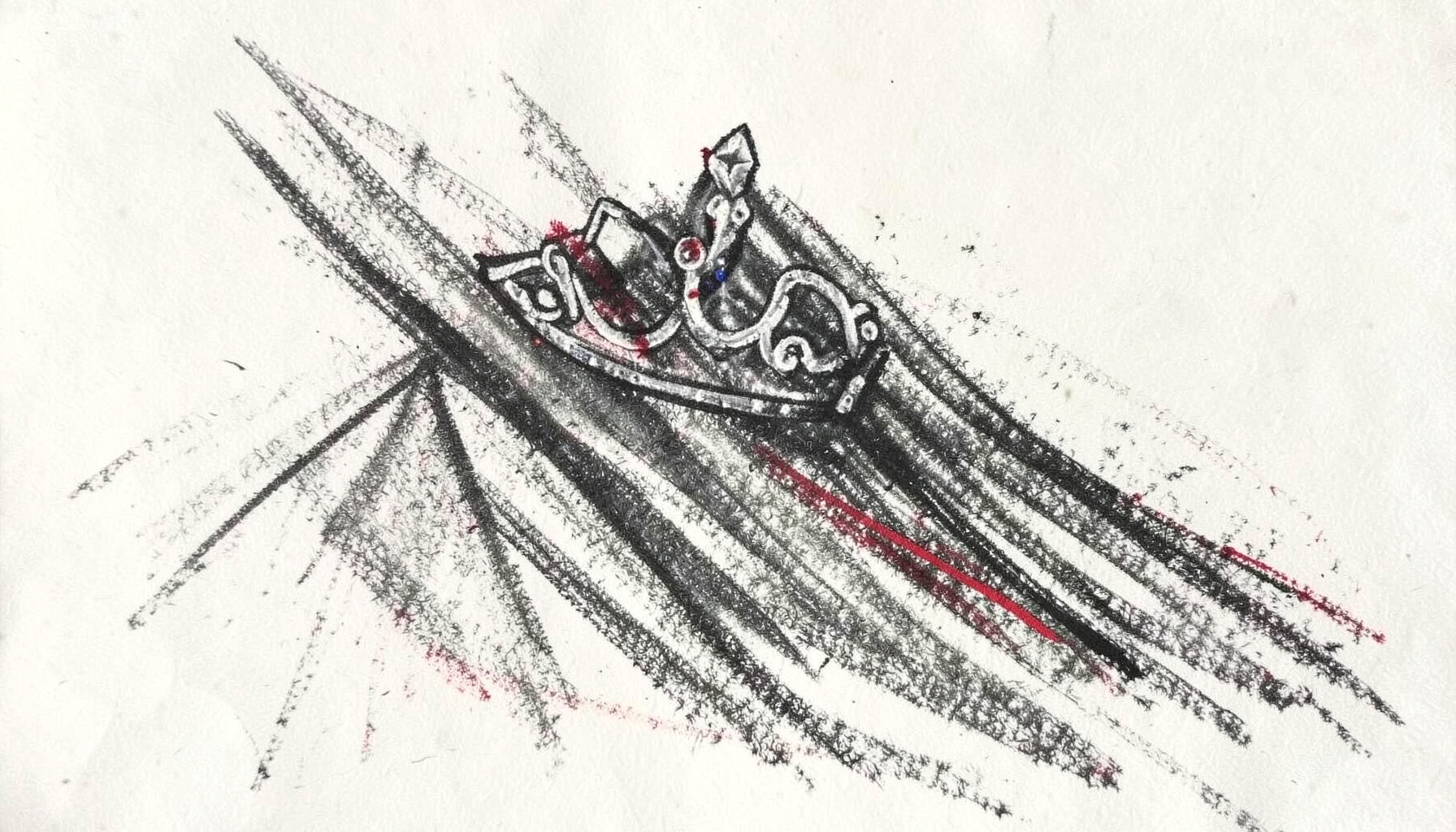
A neutral introduction to wedding accessories and bridal styling — a starting point for visitors exploring the topic.
Milgrain Edges and the Enduring Charm of Vintage Rings
A milgrain edge is a fine decorative border made from tiny, rounded beads of metal. Set along a ring’s rim, shoulders or scrollwork, the beads create a soft, scalloped outline that catches light and gives the design an antique, almost lace-like character.
Milgrain detail works beautifully on wedding bands, signet rings and coloured-stone designs. It gives familiar silhouettes a vintage accent without making them look like costume jewellery, which is particularly useful when styling a tiara, plain gold band or mixed-metal bridal ensemble.
Origins and construction of milgrain
Milgrain became especially popular during the Edwardian and Art Deco periods, when jewellers used delicate metalwork to balance bold centre stones with intricate settings. The technique continued on wedding rings and cocktail jewellery, often surrounding a central gem or following the curved edge of a band.
Unlike pavé, which places small gemstones close together, milgrain uses beads of the same metal as the ring. A jeweller forms these beads with a grooved wheel, then applies them to the rim or decorative framework. Even spacing is essential, because raised edges can gather dirt and make otherwise clean lines appear uneven.
This historic craftsmanship remains central to modern bridal jewellery. Browsing bridal jewellery inspiration can show how understated borders, floral settings and sentimental details translate into rings suitable for contemporary Australian weddings.
Why milgrain creates vintage character
The defining feature of milgrain is its texture. Tiny highlights travel around the ring as the wearer moves, producing a warm, hand-finished appearance. This visual softness pairs well with old-cut diamonds, sapphires, emeralds and rose-toned gold.
| Feature | Milgrain edge | Smooth polished edge |
|---|---|---|
| Outline | Beaded and subtly scalloped | Clean and uninterrupted |
| Character | Ornate, romantic and antique-inspired | Minimal and contemporary |
| Best paired with | Filigree, lace-like details and coloured stones | Sculptural settings and plain bands |
| Maintenance | Requires careful, regular cleaning | Generally simpler to maintain |
Milgrain is not automatically more valuable than a smooth finish, but good execution adds labour and visual complexity. Strong examples have evenly sized beads, smooth transitions and a secure border that will not loosen with normal wear.
Design routes for milgrain jewellery
For an engagement ring, milgrain can frame a centre stone, trace a cathedral setting or edge the shoulders of a knife-band design. It also works around signet rings and sapphire clusters, where a fine border emphasises coloured gems without competing with them.
Couples seeking symmetry may find that toi et moi rings offer an elegant setting for two stones. A milgrain line could connect the gems or appear around the gallery, turning a modern concept into something with an Edwardian character.
Milgrain can also refresh inherited jewellery. A jeweller might add matching borders to a family stone or incorporate a beaded edge into a new band. Current popular bridal accessory styling likewise supports mixing periods, provided the metals, stone colours and proportions feel deliberate.
Choosing milgrain rings in Australia
Independent jewellers in Sydney and Melbourne offer a strong market for vintage-inspired engagement rings and bespoke wedding bands. Established bridal areas such as Double Bay, Paddington and Toorak provide useful opportunities to compare designs, inspect settings under magnification and discuss alterations with a jeweller in person.
Ask whether the beading is mechanically applied or hand-finished, and request photographs of the completed ring rather than relying only on a polished sample. Local ring sizing can vary between brands, so the fit should be checked in person. Resizing a milgrain ring may require rebuilding part of the edge, which should be included in the quoted price and warranty terms.
Australian jewellers should explain the precious-metal fineness marks on the piece, including 750 for 18-carat gold or 950 for platinum. Quotes are normally provided in AUD, so it helps to confirm whether GST, resizing, appraisal and later servicing are included. Independent bridal professionals can also coordinate the ring with a chosen headpiece; an independent bridal styling service is useful when the jewellery needs to feel integrated with the entire outfit.
Recommendations for choosing and wearing milgrain
A restrained silver headpiece can balance an ornate milgrain ring beautifully. This guide to a simple silver tiara shows how clean lines provide contrast without creating a competing centrepiece.
- Inspect the beads closely for consistent spacing, rounded shape and smooth joins.
- Ask the jeweller how the edge will be protected during polishing, resizing and servicing.
- Choose a lower-profile milgrain placement for rings worn daily during work or manual activities.
- Pair one detailed ring with simpler earrings, a plain band or a minimalist tiara.
- Match the milgrain metal closely to the main band to keep the detail visually cohesive.
- Request a final inspection after any resize, with particular attention to the repaired border.
Book a fitting with an experienced jeweller, bring references of your bridal jewellery and compare milgrain options under natural light. A clear brief, careful sizing and close inspection will help you choose a ring that retains its vintage charm through everyday Australian life.
STYLE HERITAGE
NOTES EDITORIAL
REVIEW REFERENCE
GUIDE DESIGN
STUDY READER
TRUST